A galactic cosmic ray cavity in Earth-Moon space
Mar 27, 2026·
 ,,,,,,,,,,,,,,,,,,·
1 min read
W. Shang
Co-first author
,J. Liu
Co-first author
Zigong Xu
Co-first author
,C. Yue
R. Guo
C. Xiao
Q. Shi
R. F. Wimmer-Schweingruber
J. Guo
A. W. Degeling
R. Rankin
A. Tian
Q.-G. Zong
C. Han
J.-S. Park
H. Wang
W. Liu
S. Fu
L. M. Zhai
D. Chen
S. Ni
T. L. Chen
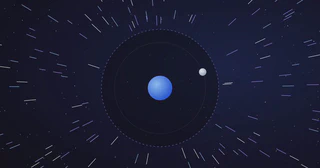
Chang’E-4/LND data reveal a ~20% deficit of galactic cosmic-ray protons in part of the Moon’s orbit, caused by Earth’s magnetosphere shadowing cosmic rays. Co-first author.
In the news
Press releases & institutional news
- Shandong University — Prof. Shi Quanqi’s team leads an international collaboration discovering a galactic cosmic ray cavity (April 2026; names the three co-first authors)
- ARTEMIS mission (UCLA) — 2026 ARTEMIS Science Nugget: A Galactic Cosmic Ray Cavity in Earth-Moon Space
- 大众新闻 Dazhong News — 山东大学团队联合国内外学者发现地月空间"宇宙线空腔" (26 March 2026)
- 大众新闻 Dazhong News — 星际航行竟有天然"避险区"!山东大学团队牵头发现"宇宙线空腔" (26 March 2026)
Media coverage
- Live Science — Chinese lander reveals giant ‘cavity’ of radiation between Earth and the moon (25 March 2026)
- Gizmodo — Astronomers spot previously unknown space ‘cavity’ that’s quietly protecting the Moon (25 March 2026)
- Scientific American — Earth’s magnetic field may be more powerful than we thought (2026)
- The Naked Scientists (interview & podcast) — Earth’s magnetic field shields Moon from space radiation (27 March 2026)
- Starlust — Earth’s magnetic field may be able to protect NASA’s Moon base from galactic cosmic rays (27 March 2026)
- 快科技 Mydrivers — 嫦娥四号发现地月空间"宇宙线空腔" (30 March 2026)
- Cislunar Space — Chang’e-4 discovers “cosmic ray cavity” in Earth-Moon space (2 April 2026)
- ScienceAlert — Eerie cosmic-ray ‘cavity’ found lurking in Earth-Moon space (3 April 2026)
Authors
Authors

Authors
Zigong Xu
(he/him)
Senior Postdoctoral Scholar Research Associate in Physics
I study how the Sun accelerates particles to high energies and what those particles — together with galactic and anomalous cosmic rays — do to the radiation environment of the inner heliosphere and the Moon. I work hands-on with instrument data from NASA’s Parker Solar Probe (IS⊙IS/EPI-Hi) and IMAP (HIT), ESA’s Solar Orbiter (EPD/HET), and China’s Chang’E-4 lander (LND), combining multi-spacecraft observations, Geant4 simulation, statistics and machine learning to understand solar energetic particle events and assess radiation risk for space exploration.
Authors
Authors
Authors
Authors
Authors
Authors
Authors
Authors
Authors
Authors
Authors
Authors
Authors
Authors
Authors
Authors
Authors
Authors
Authors